
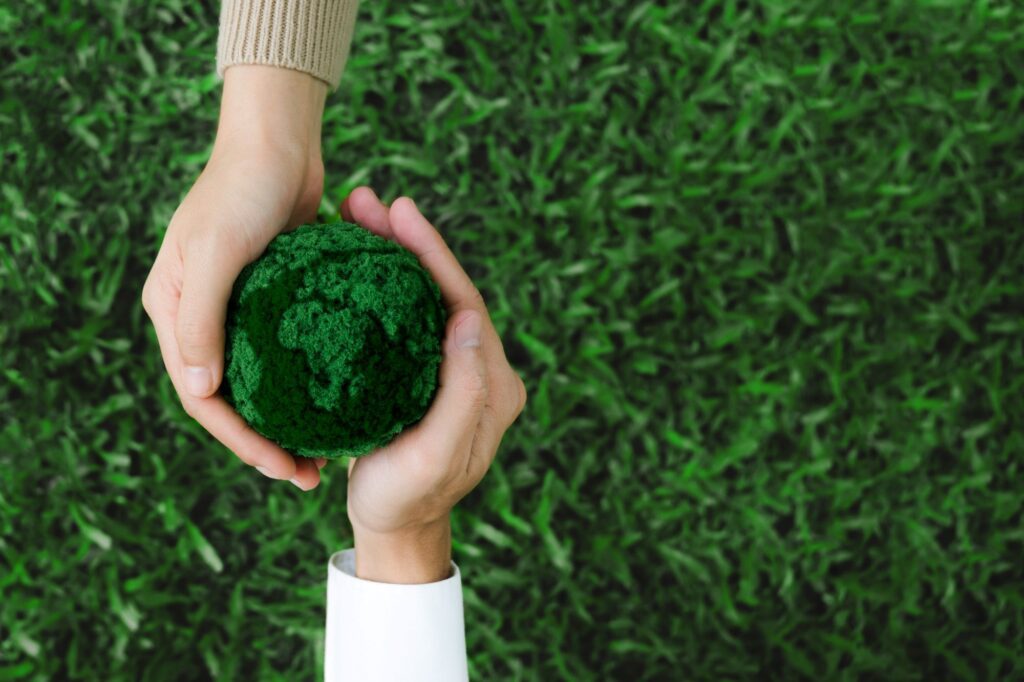
For three decades, Prairiewoods Franciscan Spirituality Center has embraced a deep commitment to caring for creation—integrating eco-spirituality into every aspect of our community and mission. A spirit of reverence for Earth infuses all we do—from sustainably designed facilities and organic gardens to programming that reflects our interconnectedness with all life, the Source of All Being, and one another.
Caring for Creation is more than a value of Prairiewoods, it is a way of being, a way of life.
A cornerstone of our commitment to ecospirituality is the annual Spirituality in the 21st Century event. Each year, Prairiewoods brings together leading voices that inspire us to deepen our relationship with the earth and with one another. Over the years, this gathering has welcomed renowned eco-spiritual thought leaders, including Marcus Borg, Ilia Delio, and Diarmuid O’Murchu, creating a vibrant space for reflection, learning, and transformative dialogue. This year, we are honored to host Dr. Lisa Dahill of the Hartford School of International Religion and Peace, whose scholarship invites us to expand our ecological awareness and spiritual imagination. Through these powerful conversations, we continue to raise our collective consciousness and nurture a community dedicated to the flourishing of all creation.
We had the chance to sit down with Dr. Dahill and talk through the importance of creation, especially at this moment in time.
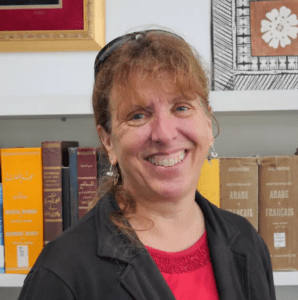
PW: Dr. Dahill, for someone who has never really thought about how creation connects with one’s heart, faith and spirituality, why does spending time immersing yourself in nature matter?
Dr. Dahill: “Many us have been taught on a deep level that what is holy is separate from the world. Consciously or not, we may experience the world as not-holy (secular, profane, polluted), a mere stage for the grand human drama that we assume is God’s primary concern. The world is backdrop: beauty to delight us, perhaps, or resources to be used, commodities to be exploited for our benefit. When we begin to experience the world itself as holy, an essential locus of divine presence and self-revelation, the heart and face and fur and web of the Sacred begin to dawn for us in ways we cannot encounter through human buildings and texts and arts, however magnificent or beloved. The world reveals itself as shifting facets of a strange, beautiful, emergent, and miraculous divine reality endlessly intimately and awesomely present. It is the Incarnation made manifest: the entire biosphere the Body of Christ.”
PW: What benefits can we experience when we start to see the world with new eyes, and as dwelling places of the Divine? Why is this helpful in our world today?
Dr. Dahill: “The human world is heading off the rails, and if news and social media and screens and ads and memes and AI and money and celebrities and human needs alone are what orient us to reality, we too will go insane. Our bodies, constituted by our physical relations with beings of all kinds, still live in the reality of our ecological and spiritual interrelation with all that is, but our psyches too often don’t – and being cut off from reality is crazy-making. Our society’s epidemic levels of loneliness, violence, addictions, exhaustion, cynicism, rage, and stress are symptoms of this collective insanity. Our psyches are made from and for the intimate kin relations that knit us into communion with all that is. To begin to attend again to those kin relations with beings of many kinds is to sense both them and ourselves in wild new ways, no longer lonely at all but encountering spiritually and emotionally the sweet holy intimacy that literally constitutes us, the divine mystery of it all.”
PW: You’ve invited us to consider and honor the sacredness of all that is in the learning objectives, why?
Dr. Dahill: “This is the mystery Dietrich Bonhoeffer asserted in his Ethics: for Christians, in Jesus Christ, God and world are not separate realms but one reality, not two. Biology teaches what mystics and indigenous traditions have long asserted: we are all utterly interconnected. The molecules of the flesh of Jesus of Nazareth permeate the biosphere; it’s all the incarnate divine presence. Living in reality means inhabiting this sacredness moment by moment. It has to do with shifts of perception, with waking up, as Thich Nhat Hanh reminds us. Living in reality – this magical, reenchanted divine world – means perceiving your own flesh as holy as Jesus’s, this tree’s bark and oceanic tides made of God/matter, storms and tears and each new birth of each new kind all astonishing divine revelation beckoning us into ever deeper awe and attention and action. How can we learn to live in reality? How might you inhabit more and more fully the incarnate wild divine reality that is this world?”
PW: In your work, you encourage people to spend time in both indoor and outdoor rituals. How do rituals impact our sense of connection?
Dr. Dahill: “We will experience these questions not only in words and images, with our minds and hearts and one another, but also in our bodies, in sensory relation to the outdoors (nearby woods, prairie, wind, rain, creatures of all kinds) – whatever presences of the land beckon to you. Whether guests come for the day or weekend or online, we will include contemplative practices you can take home, both solo and together. In our fast-paced society, we have lost many of the ordinary and extraordinary forms of ritual practice that once grounded humans to one another, to the land and creatures, to the divine, to their own hearts and bodies. Having the opportunity to experience this grounding together will be a rich blessing of the day/weekend.”